
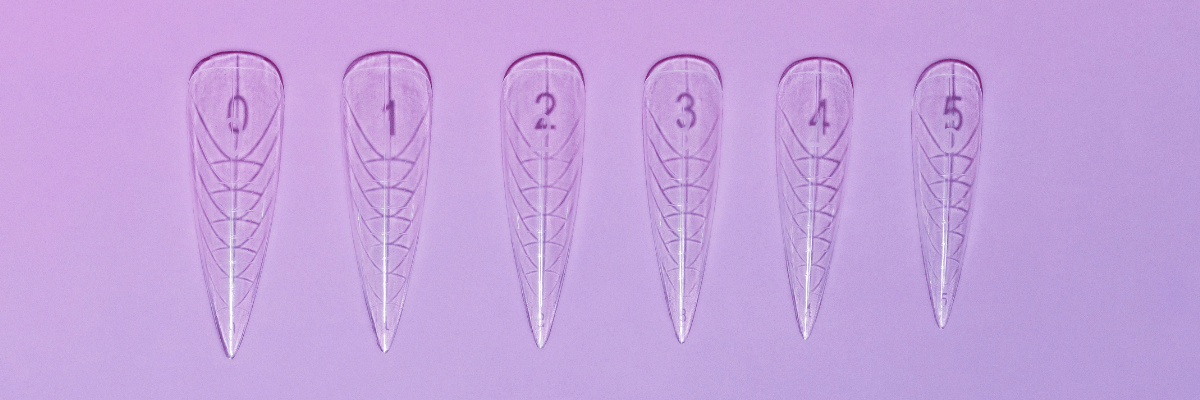
Less filing, fewer corrections, easier size selection, and more time to work with clients. That’s exactly what the updated DNKa’ upper forms are all about.
All DNKa’ upper forms come in 15 sizes, from 0 to 14. Each form features large, clearly visible numbers, making it easy to find and select the right size in just a few seconds. The size range accommodates different natural nail widths, from 6 to 16 mm. This makes the forms suitable for both narrow and wide nail plates. The collection includes three different designs. Let’s take a closer look at how they differ and which tasks they are best suited for.
Upper forms can significantly reduce nail modeling time, but choosing the right form for each nail is essential. The fit and final result depend on the width, shape, length, and growth direction of the natural nail.
“A good upper form should make a nail technician’s work easier. Place it, check the symmetry, cure it in the lamp — and you already have the correct foundation.”
— says Olga Garaeva, DNKa’ brand educator
Start with the Right Size
Before starting the application, test the form against the natural nail plate. It should cover the entire width of the nail without putting pressure on the lateral nail folds. If the form is too small, it may cause excessive pressure and discomfort, as well as leave the growth points exposed. If it is too large, it may leave excess material along the sides, make thickness control more difficult, and affect the correct nail architecture.
How to Tell If the Form Fits Correctly
Before curing, check that the form:
- fits the nail width correctly;
- does not put pressure on the nail;
- has no gaps or trapped air;
- follows the natural nail’s axis.
The more precisely the form fits the natural nail, the less work will be needed after curing.
Choose the Right Form for Each Nail
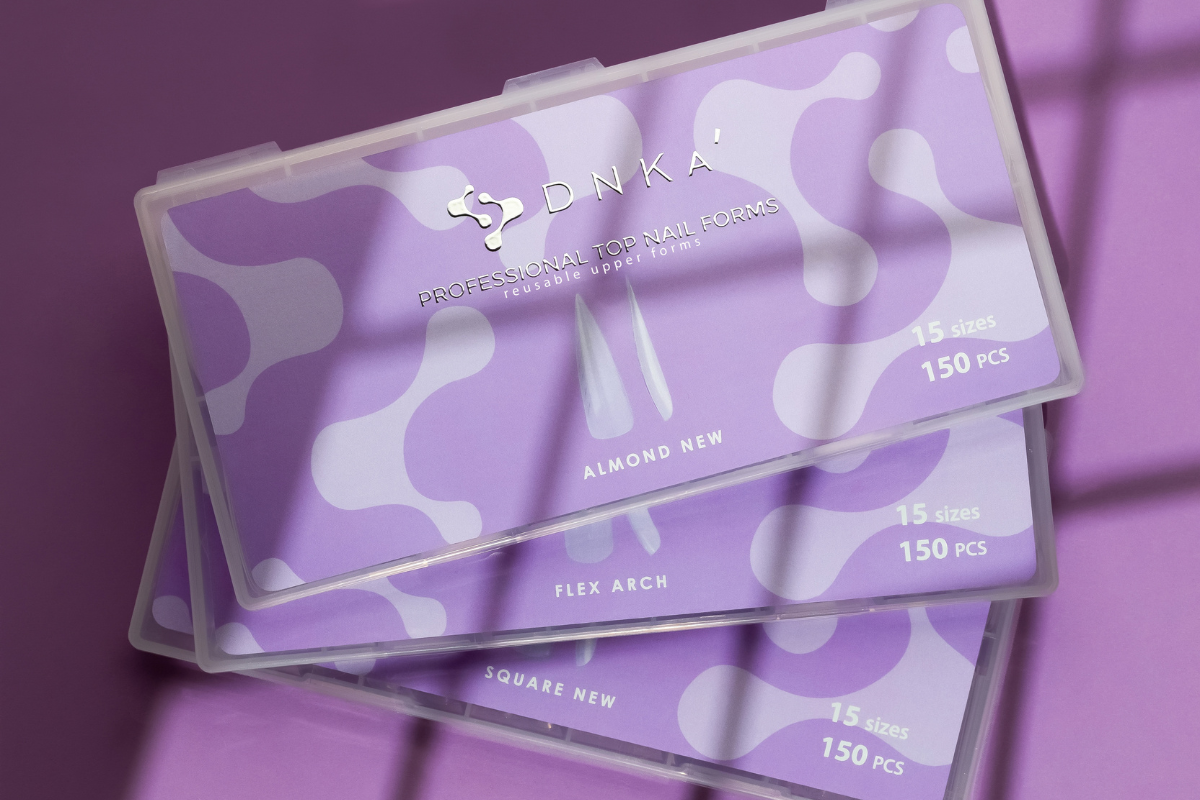
Every nail is unique, so let it express its individuality. That’s why DNKa’ has developed three types of upper forms: Almond NEW, Flex Arch, and Square NEW. Let’s explore each of them in more detail.
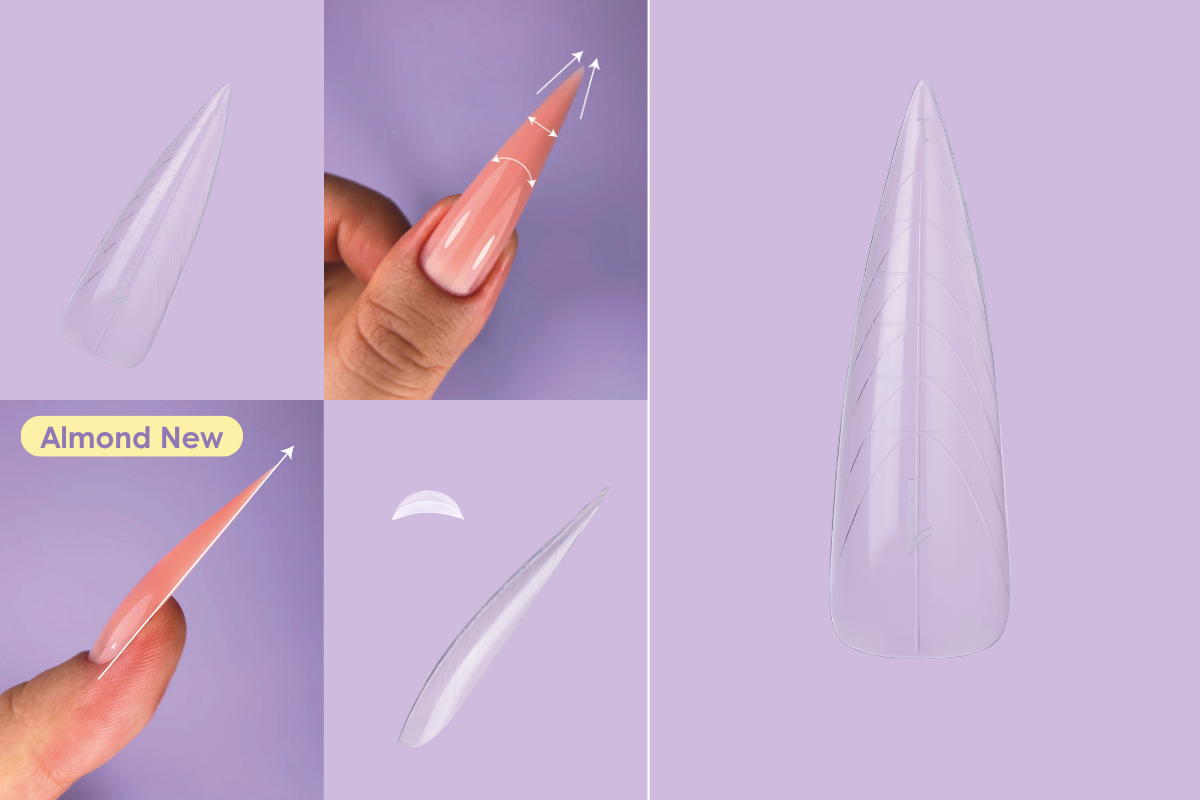
Almond NEW
Looking to create a beautiful almond, oval, or ballerina shape? Almond NEW helps you achieve the desired geometry quickly while reducing the amount of filing required afterward. With 15 sizes (from 0 to 14) and widths ranging from 6 to 16 mm, you can find the right fit for different natural nail widths. The transparent, flexible material allows you to control product application and reduce filing time.
“When the correct architecture is already built into the form, there is much less work to do after curing. There’s no need to spend time on something that can be done right from the start.”
— comments Olga Garaeva, DNKa’ brand educator
Flex Arch
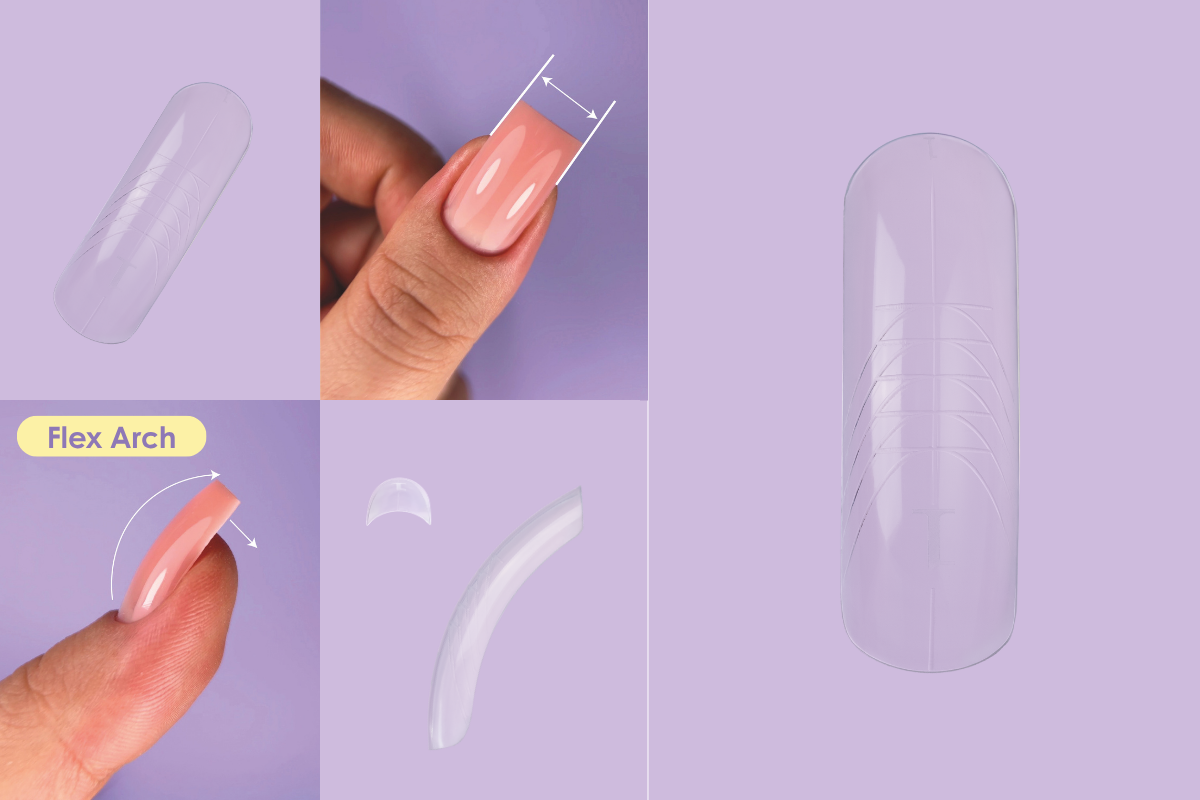
If the natural nail grows downward, a standard form may not fit properly. Flex Arch forms are specifically designed for this type of nail geometry. Their arched construction and moderate C-curve help create stable nail architecture and control the direction of the nail. In this case, the form’s design plays an important role in correcting the nail’s growth direction. This option is suitable for nail modeling and strengthening, as well as for creating short square and oval shapes.
Square NEW
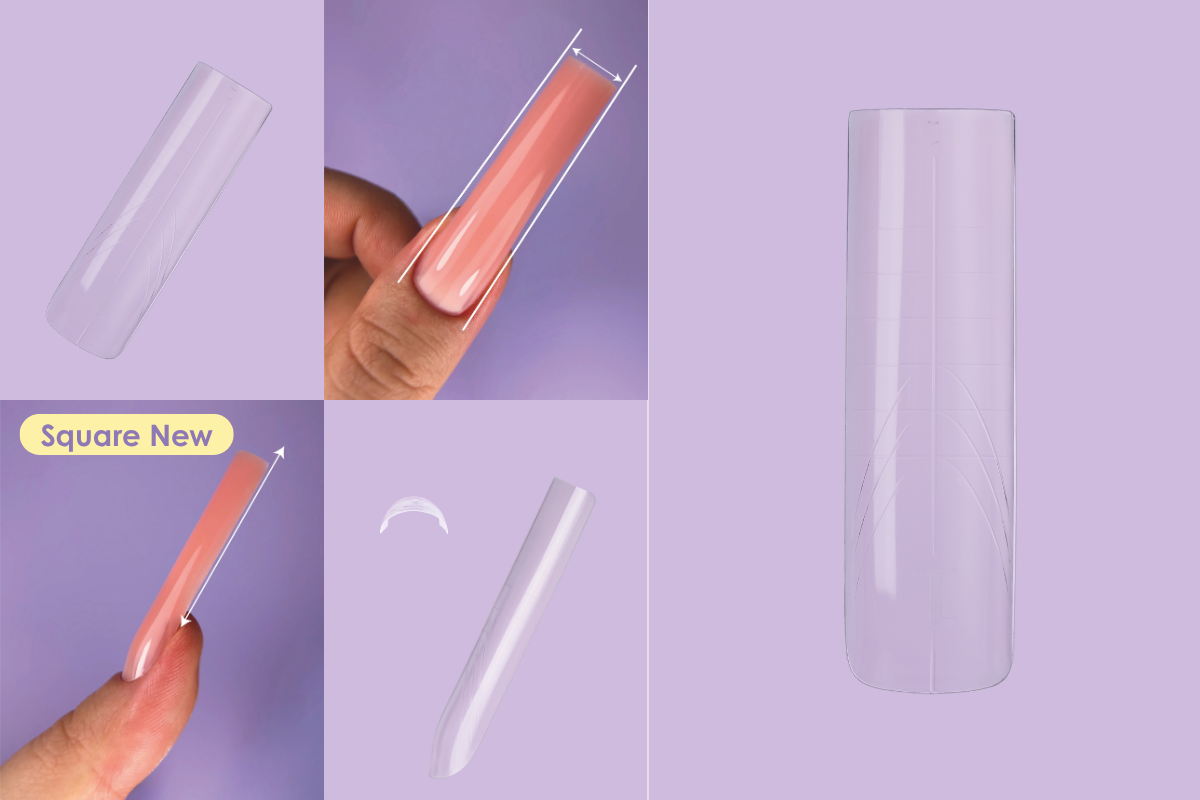
If your client wants a square shape with a clearly defined free edge, choose Square NEW. The markings help position the form evenly and maintain symmetry throughout the process. The moderate arch and stable structure help preserve the desired geometry during curing, while the thin, flexible contact area fits snugly against the natural nail without excessive pressure. Square NEW is suitable for restoring damaged or deformed nails when the correct shape and growth direction need to be rebuilt.
Why Does the Right Form Reduce Filing Time?
One of the main advantages of upper forms is the ability to create the desired nail geometry during the modeling process itself. When the form is properly selected, the architecture is correctly established, and the material is evenly distributed, only minimal refinement is needed after curing. Instead of spending extra time shaping the nail into an almond, square, or ballerina style, you get a ready-made foundation before filing even begins.
The Form Works Together with the Nail Technician
An upper form is more than just a way to apply material faster. It helps establish the desired geometry from the very beginning, maintain symmetry, and reduce the need for additional corrections. DNKa’ offers three designs for different needs. Choose the one that suits the nail and your working technique.
Which DNKa’ Upper Form Should You Choose?
- Almond NEW — for almond, oval, and ballerina shapes.
- Flex Arch — for downward-growing nails and correcting their growth direction.
- Square NEW — for a defined square shape, straight parallel sidewalls, and nail reconstruction.
Less filing. Faster nail modeling.